Article
Nov 10, 2025
Common AI Mistakes: Prompt is Not a Simple command
Outlining five common mistakes users make with AI tools like ChatGPT, Gemini, or Grok—such as lacking context, treating AI like a basic search engine, not verifying answers, stopping after one prompt, and ignoring output formats. It uses trip-planning examples for Costa Rica to illustrate problems, fixes, and improved prompts, aiming to help readers get better AI results while promoting NeoInsent AI.
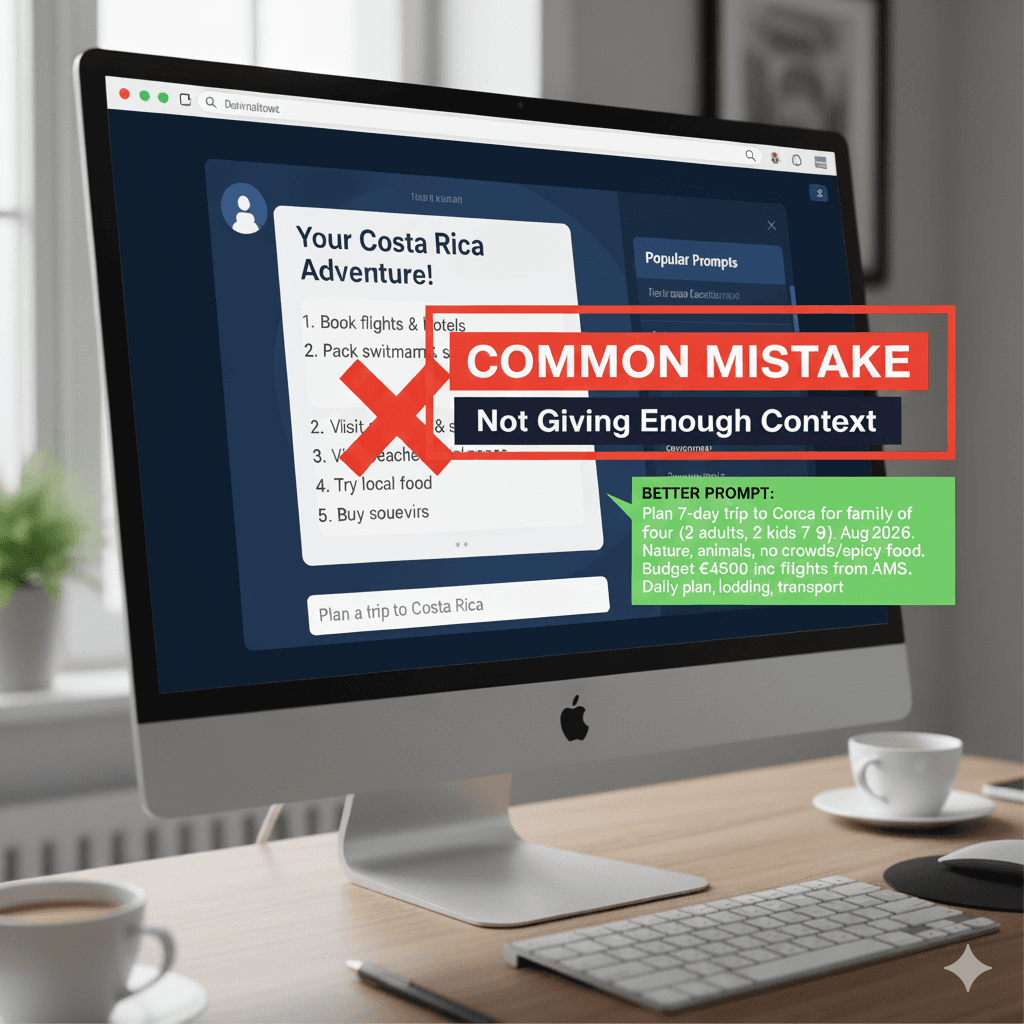
I’ve seen many people, including myself, make the same simple mistakes when using AI tools like chatGPT, Gemini or Grok. This week I want to share the most common ones, explain why they happen, and show clear fixes with real examples.
The goal is simple: help you get better results every time you use AI.
Not Giving Enough Context
Many users ask short, vague questions and expect perfect answers. AI needs details to work well.
Common mistake: “Plan a trip to Costa Rica.”
What happens: You get a generic list of hotels and beaches that may not fit your needs.
How to fix it: Add your situation, dates, people, likes, dislikes, and budget.
Better prompt: “Plan a 7-day trip to Costa Rica for a family of four (two adults, two kids aged 7 and 9). We travel from Rotterdam in the first week of August 2026. We like nature walks and animals, but we don’t like crowded beaches or very spicy food. Total budget: €4,500 including flights from Amsterdam. Include daily plan, lodging, and transport options.”
Result: A complete, family-friendly itinerary that matches your needs.
Using AI Like a Search Engine
Typing one or two words is common, but AI can do much more than return links.
Common mistake: “Costa Rica weather.”
What happens: A short summary that anyone can find online.
How to fix it: Ask for analysis or advice based on your plans.
Better prompt: “Compare weather in Costa Rica for July and August 2026. We are a family from the Netherlands planning outdoor activities. Recommend the best week and regions to avoid heavy rain.”
Result: A clear comparison with practical advice.
Accepting Answers Without Checking
AI can make mistakes or use old data. Always verify important facts.
Common mistake: “What’s the best way to rent a car in Costa Rica?”
What happens: You may follow outdated prices or rules.
How to fix it: Ask for sources and check them.
Better prompt: “List three reliable car rental companies in Costa Rica for August 2026. Include average daily prices for a mid-size car, insurance requirements, and links to official sites or recent reviews.”
Result: Useful information you can confirm quickly.
Asking Once and Stopping
One prompt is rarely enough for complex tasks. Improve the answer step by step.
Common mistake: “Write a packing list for Costa Rica.”
What happens: A long, general list.
How to fix it: Start broad, then refine.
Step 1 prompt: “Create a basic packing list for a 7-day family trip to Costa Rica in summer.”
Step 2 follow-up: “Now make it shorter. Focus on lightweight items, rain protection, and kid essentials. Keep total luggage under 20 kg per person.”
Result: A compact, practical list.
Forgetting to Set the Format
AI often gives long paragraphs when you need lists or tables.
Common mistake: “Give me flight options to Costa Rica.”
What happens: A block of text that’s hard to read.
How to fix it: Tell AI exactly how you want the answer.
Better prompt: “Show flight options from Amsterdam to San José for 4 people, departing 1–7 August 2026. Use a table with columns: airline, total price, stops, and duration.”
Result: Easy-to-compare information.
These five fixes will save you time and give you better results. At NeoInsent AI, we build tools to help you work smarter. Try these prompts with your prefer AI and see the difference.
Have a question or your own example? Leave a comment.